Author: Feargal Byrne

  • The Impact of the UK’s New Remote Gaming Duty on Marketing and Advertising Spend in Sports Betting

    The Impact of the UK’s New Remote Gaming Duty on Marketing and Advertising Spend in Sports Betting

    The UK government’s recent move to implement a 40% tax on remote gaming has sent shockwaves throughout the gambling industry, with major implications for marketing and advertising across both sports betting and iGaming.

    Whilst horse racing was seemingly sheltered from a direct increase in duty, the repercussions for horse racing and its centrepiece events, Cheltenham, the Grand National, and Royal Ascot, will be even more severe than many appreciate. This article explores why this is the case, the structural impact on marketing strategy, and the broader effects on the industry ecosystem.

    Sports Betting as a Casino Acquisition Funnel

    In the competitive sports betting landscape, operators have long operated on razor-thin margins due to aggressive overrounds (margins) and price competition.

    For years, sportsbooks have essentially functioned as acquisition engines for casino products, expensively acquired sports customers are cross-sold into iGaming, where customer lifetime value (LTV) is greater.

    Major sporting events, particularly the likes of Cheltenham, have become showcase moments for casino acquisition via sports marketing campaigns.

    The Game-Changer, 40% Remote Gaming Duty

    The new 40% remote gaming duty dramatically diminishes the profitability of iGaming. Marketing teams can no longer justify previous advertising spends if the expected LTV of a customer, factoring in this tax, is now significantly lower.

    Events like Cheltenham, which have historically justified eye-watering above-the-line (ATL) campaigns on the basis of cross-selling sports customers into casino, are particularly vulnerable.

    Operators are now compelled to recalculate ad budgets for these hallmark events, and the reality is that spend will drop precipitously by March 2026.

    Why Horse Racing Marketing Takes the Biggest Hit

    Though horse racing duty remains unchanged, the underlying economic model for bookmakers is fundamentally altered. The promotional intensity and generous pricing around major racing events were only viable because of the iGaming “pot.”

    With the tax effectively capping profit potential, racing events will see a cascade effect: less ATL spend, smaller sponsorship deals, and squeezed budgets for creative and experiential campaigns.

    Paradoxically, there is an argument that the industry’s reliance on major racing events as a feeder for casino activity means horse racing’s marketing ecosystem suffers more from the gaming tax increase than it would have from an incremental increase in racing’s own duty.

    Market Dynamics, Sponsorship, and Affiliate Retraction

    The contraction in advertising will have a domino effect on sponsorship, cycling back into reduced revenues for the sport itself and its media partners. As bookmakers tighten budgets, media and sponsorship assets once buoyed by casino cross-sell economics are now overvalued.

    Dramatic discounts for 2026 are inevitable, and affiliate partners (both in sports and casino) will see significant reductions in both revenue share (due to a smaller core pot) and lower CPA deal values reflecting compressed LTVs.

    Asset Valuation and Broader Industry Impact

    Valuations of company databases and, by extension, the companies themselves, must be reassessed downward.

    The government’s effective “nationalisation” of remote gaming by becoming the biggest net earner from online gaming play, when all costs operators have to bear are considered, means that both the capital returns for operators and the value of their marketing platforms are fundamentally reduced.

    For an industry accustomed to high spending and rapid customer value growth, the new climate makes current KPIs and historic media valuations unsustainable.

    Looking Ahead, An Unsquareable Circle?

    Running the numbers for 2026, operators face a stark reality. They must reassess marketing budgets in line with the new reality.

    The recalibration required by the remote gaming tax forces a total reset in marketing objectives and economics.

    As online bookmakers strive to remain competitive, the pricing available to customers will inevitably become less attractive, and the industry will see an undoubted, dramatic drop-off in media and sponsorship spend, particularly visible in events like Cheltenham, now effectively deprived of their underpinning acquisition rationale.

    Strategic Readjustment and Partner Support

    The path forward requires strategic planning that accounts for the fundamental shift in unit economics. Operators must act decisively before the tax takes full effect, optimising budget allocation to maximise customer value during this critical window.

    Key considerations include front-loading acquisition spend on high-efficiency channels, recalibrating player value expectations based on post-tax revenue models, and reconstructing the marketing mix to prioritise channels with better retention economics and reduced dependency on cross-sell conversion rates.

    Here at Tentenseven, we understand these dynamics and can guide operators through a comprehensive budget optimisation process for 2026.

    By modelling various scenarios, identifying which customer segments retain profitability post-tax, and restructuring campaigns around sustainable acquisition costs, operators can navigate this transition with minimal disruption. Tentenseven’s expertise in iGaming marketing strategy helps clients weight spending strategically before the tax impact fully materialises, assess the true lifetime value of acquired players under the new fiscal regime, and architect a marketing mix that remains competitive and profitable in the transformed landscape.

    Contact Us

  • The Real Reason Las Vegas Is Struggling: Short-Term Thinking, Not Economics

    The Real Reason Las Vegas Is Struggling: Short-Term Thinking, Not Economics

    Las Vegas was built on spectacle, hospitality, and the irresistible promise of a great time. Yet in recent years, visitor numbers and gaming revenues have faltered. Many analysts blame macroeconomics, shifting demographics, or competition. But the truth is far more direct: ignoring the fundamentals of casino marketing.

    By abandoning long-term relationship marketing in favour of short-term transactional tactics, corporate Vegas has alienated its most valuable asset, its loyal customers.

    A Misunderstanding of Casino Marketing

    Successful casino marketing is not about extracting maximum profit from a single trip. It’s about Customer Lifetime Value (LTV)—measured across years of repeat visits. When executed correctly, this generates a Net Present Value (NPV) in the tens of thousands per player.

    Corporate Vegas, however, has sacrificed this proven approach for the illusion of quick gains. By betraying the ethos of a casino’s relationship with its players, operators have eroded decades of trust and loyalty.

    The Vandalism of the Vegas Brand

    For generations, the marketing formula was simple: create unforgettable experiences, comp generously, and cultivate belonging. But Wall Street’s takeover of the Strip shifted priorities from loyalty to extraction. The consequences are painfully obvious:

    • £25 bottles of water in hotel rooms.
    • £20 beers by the pool.
    • Free drinks are restricted to higher handle criteria.
    • Triple-zero roulette and historically low slot RTPs.
    • Resort fees buried at checkout.
    • Ridiculous additional fees to be seated at a table with a view

    For the once- or twice-a-year visitor, this isn’t just poor value—it feels insulting. And when they stop returning, Vegas doesn’t just lose a single trip. It loses a long-term relationship worth far more.

    Are Their Hands Tied By Sale and Leaseback Deals?

    In recent years, many of the Strip’s flagship resorts have sold their properties to real estate investment trusts (REITs) and now lease them back.

    While this sale-and-leaseback model provides an immediate cash infusion, it shackles operators with ongoing rent obligations on top of the already relentless pressure to deliver quarterly margins to investors.

    The result is a business model that prioritises short-term extraction over customer relationships. Instead of investing in loyalty programs, service, or reinvigorating the guest experience, management is forced to squeeze every dollar from today’s visitor simply to keep up with rent payments and satisfy Wall Street’s demands, leaving little room for long-term strategy.

    Local Casinos are Not Seeing Drops

    Contrast the Strip’s decline with the relative success of locals-focused casinos in 2024–25. Properties like Stations Casinos, Boyd Gaming, and South Point thrive because they’re run by seasoned casino operators, not financial engineers. Their formula is straightforward:

    • Fair odds.
    • Reasonable pricing.
    • Attentive service.
    • A genuine sense of community.

    By focusing on retention and value, these casinos drive repeat visits at minimal cost. Their ROI is long-term and sustainable—something the Strip has definitely lost sight of.

    To an outsider looking in, it seems that the strip resorts and local casinos are using completely different models and metrics for their marketing.

    The Cost of Short-Termism

    The Strip now feels less like an entertainment hotspot and more like a hollowed-out shopping mall—overpriced, sterile, and drained of its legendary “buzz.”

    Scroll through online forums and you’ll find countless ex-regulars, once loyal for decades, who now vow never to return. This isn’t noise, it’s the unravelling of a brand painstakingly built over generations.

    Vegas is different from most tourist destinations. It is the one place that people come back to multiple times and in a lot of cases multiple of times per year.

    Therefore, Vegas simply can’t “rip-off” the tourists like many “once in a lifetime” destinations. It has to deliver consistent quality and value. This was the bread and butter of Vegas before the recent excessive price and fees gauging.

    Reclaiming the Crown

    For Las Vegas to recover, it must relearn its own fundamentals:

    • Prioritise LTV over one-off revenue.
    • Put customer experience at the heart of every decision.
    • Reinvest in loyalty programs and generous comps.
    • Listen to customer feedback.
    • Restore authenticity and atmosphere to the casino floor.

    Most importantly, finance must stop dictating marketing strategy. Revenue management can set prices, but it cannot build loyalty.

    Signs of course correction are beginning to emerge, with some Strip operators quietly rolling back the most egregious practices. Discounts and promotional offers are returning, room packages are being priced more competitively, and most notably, the Wynn, recently made headlines by removing triple-zero roulette from its casino floor.

    Moves like these acknowledge that gouging customers is unsustainable and that restoring fairness, value, and trust is essential to rebuilding long-term loyalty. If more resorts follow suit, it could mark the first step toward reestablishing the Strip as a destination where players feel respected rather than exploited.

    It Really is All About Relationships and Retention – All Year Round

    Strip resorts have a unique opportunity to extend their reach beyond Nevada by leveraging their digital assets in licensed states across the U.S., creating a seamless, 365-day customer experience that keeps players engaged year-round.

    Done well, this omnichannel strategy can strengthen loyalty by linking on-property visits with online play, rewards, and brand affinity.

    However, the recent wave of price hikes, hidden fees, and nickel-and-diming on the Strip undermines this opportunity. When customers feel ripped-off in Las Vegas, that negative perception doesn’t stop at the casino floor, it follows the brand into its digital operations, tainting online platforms that should otherwise be an extension of trust and convenience.

    Conclusion

    The decline of Las Vegas is not economic destiny. The success of locals-focused casinos proves that when customers feel valued, they return. But as long as the Strip chases short-term profit at the expense of long-term loyalty, it risks losing the one thing it can’t buy back: its reputation.

    Las Vegas doesn’t have an economics problem. It has a marketing problem. And unless that changes, the house may finally lose its greatest asset—its customers.

    Hopefully, this can be rolled back, and we will see a return to what made Vegas probably the best destination in the World, with a loyal fanbase that returns multiple times over the course of their lives.

    Contact tentenseven

    Looking for Marketing Support/Consultancy for your iGaming and Sports Betting brands. Let’s arrange a call.

  • Why Most iGaming and Sports Betting Operators Are Doing PPC Wrong

    Why Most iGaming and Sports Betting Operators Are Doing PPC Wrong

    In the fast-paced world of iGaming and sports betting, pay-per-click (PPC) advertising remains one of the most powerful yet misunderstood marketing tools. Many operators shy away from PPC due to high cost-per-click (CPC) rates or rely on flawed metrics that undermine their campaigns. The result? Missed opportunities to capture high-value customers and drive sustainable growth.

    The truth is, when executed strategically, PPC is the most effective paid channel for challenger brands aiming to scale quickly in this competitive industry. Here’s where most operators go wrong—and how to get it right.

    The High CPC Myth

    High CPCs (often £50, £100, or more) can intimidate marketing managers, prompting them to divert budgets to “cheaper” channels. This is a costly mistake.

    In iGaming and sports betting, high CPCs reflect the lifetime value (LTV) of acquired customers.

    Smart marketers bid based on this long-term potential, not short-term costs. Avoiding PPC because of high CPCs is like passing up a thriving business opportunity to chase fleeting savings.

    A single high-value customer can generate a multiple of your marketing budget, for a significant time period. By shying away from PPC, operators often compete for low-value players while leaving significant profits untapped.

    They then wonder why their player value is in the toilet compared to more successful competitors.

    Targeting the Wrong Metrics

    Many operators set arbitrary cost-per-acquisition (CPA) targets, often dictated by individuals with limited experience in gambling or marketing.

    Only the top finance teams work with marketing to truly work out ROI and workable marketing targets for each channel. Quite often, a CPA ceiling is placed across all channels. This is the death knell for successful iGaming and sports betting marketing.

    This approach is a recipe for failure.

    The gambling industry, from Venice’s historic Il Ridotto casino to betting at Ascot by aristocrats in the 1800s through to modern online football bettors and slot players, has always thrived on high-value VIP players. Rigid CPA targets choke off the channels best suited to attract these lucrative customers.

    Instead of chasing delusional short-term ROI with blanket CPA goals, campaigns should focus on the net present value (NPV) of customer cohorts.

    Even a small sample of 1,000 customers can yield revenue for over 20 years. The goal is to build lasting relationships, not fleeting wins. You are building a business not just ticking a box.

    One Size Does Not Fit All

    A generic PPC strategy won’t cut it. Casino table games, slots, live casino, major sports, and niche betting markets each demand tailored keyword targeting, ad copy, and bidding strategies.

    Seasonality, the sporting calendar, and the bettor’s mindset vary by product. Treating all products the same squanders opportunities and leaves money on the table.

    Customising campaigns to align with each product’s unique audience and context is critical for maximising returns.

    Bonuses = Noise (and Unnecessary Costs)

    Many campaigns inflate bonuses to meet arbitrary CPA targets, but this tactic backfires. It increases costs, attracts bonus-hunters, and alienates serious players.

    My most successful campaigns often used modest bonuses—or none at all. In regulated markets with strict AML/KYC requirements, high-value bettors value trust and engagement over flashy “free bet” offers, which they often view as red flags.

    Speak directly to your VIP audience with messaging that resonates, rather than catering to casual punters chasing promotions.

    Test the Player Distribution

    Effective PPC planning starts with understanding the value distribution of players from a given channel. As a rule, acquire at least 1,000 customers using top head terms to evaluate whether the distribution aligns with your expectations.

    sample play distribution for igaming and sports betting

    Monitor early deposits and activity to identify high-value behaviours, enabling you to refine campaigns before scaling your budget. This data-driven approach ensures you invest in the right audiences.

    Define a “Customer” Correctly

    Too many operators define a customer as a “first-time depositor,” but this is far too simplistic. A true customer should:

    • Sign up
    • Make an initial deposit
    • Play through any welcome bonuses or winnings
    • Make a second deposit
    • Meet a minimum staking threshold (specific to sports or casino)

    Using this definition, your true CPA will be higher, but the customer quality will be significantly better. When evaluated on a like-for-like quality basis, PPC often emerges as the most cost-effective channel.

    The Bigger Picture

    For startups and challenger brands looking to scale, PPC is the top priority. Paired with organic social to build credibility, it’s the most efficient way to allocate your marketing budget.

    While established brands may have different strategies, PPC offers the fastest route to acquiring high-value customers, driving long-term revenue, and boosting company valuation for a potential sale or IPO.

    Conclusion

    In iGaming and sports betting, PPC isn’t just another channel—it’s the channel.

    Success hinges on adopting the right mindset: prioritize lifetime value, tailor strategies to each product, avoid vanity metrics, and target your high-value audience with precision.

    Get this right, and PPC will transform your growth trajectory.

    Talk To Us About Optimising Your PPC Channel

  • How LLMs and SEO Are Reshaping iGaming: Why Front-of-Mind Matters More Than Ever

    How LLMs and SEO Are Reshaping iGaming: Why Front-of-Mind Matters More Than Ever


    In a saturated iGaming market where most operators offer similar games and promotions, standing out requires more than big bonuses, it demands front-of-mind awareness.

    With large language models (LLMs) and AI-driven search experiences like Google AI Overviews and ChatGPT changing how users discover brands, the traditional SEO playbook is no longer enough.

    Now, visibility means being recognised, trusted, and mentioned consistently, not just ranking well. LLMs prioritise authoritative content and strong brand signals, making it essential for operators to cultivate recognition across digital touchpoints.

    To cut through the noise, brands must be recalled instantly and perceived as trustworthy by both users and AI systems alike.

    The Move Toward Full Stack Marketing

    The era of isolated marketing channels is over. Success in today’s AI-augmented landscape requires a unified, full stack approach, blending SEO, content, PR, social media, influencer partnerships, and paid campaigns into a seamless strategy.

    Personalisation, consistent brand storytelling, and regulatory compliance are equally important. Every channel must work together to reinforce the brand and drive sustainable growth.

    Why Brand Mentions and Signals Now Lead the Way

    Brand signals have become crucial for discovery, not only in search engines but also within LLM generated content. These AI systems increasingly draw from a variety of sources, prioritising brands that are frequently referenced and regarded as trustworthy.

    As a result, direct response ads alone no longer cut it.

    Operators need to invest in media coverage, quality backlinks, and positive mentions across the web and social platforms. These signals strengthen both visibility and credibility, vital in an industry where regulation and consumer skepticism run high.

    Social Media’s Expanded Role

    Social media now plays a pivotal role in iGaming marketing, and its influence goes far beyond immediate clicks and conversions. A well-managed social presence builds brand recall, nurtures community, and encourages retention, often with more long-term impact than acquisition campaigns.

    With AI-driven discovery tools mining content from platforms like X, TikTok, Instagram, and Facebook, social media has become a core source of real-time brand perception.

    It humanises the brand, provides direct access to player sentiment, and fuels engagement—all of which are key as tracking becomes less reliable and brand trust becomes more essential.

    The Interplay of PR and Social Media

    PR and social media are increasingly interconnected. Journalists and media outlets often use social channels to find stories and track emerging trends, which makes a strong social presence a valuable asset for digital PR efforts.

    Creating content that’s both newsworthy and shareable can significantly expand reach and open doors to earned media. These efforts also contribute to SEO and LLM discoverability by generating credible brand mentions and authoritative backlinks.

    Reevaluating Traditional Media Budgets

    Attribution is not a precise as we as marketers would like to think. Putting budget into traditional channels was considered the safe option by many marketers is now being questioned more than ever.

    There has been a tipping point in board rooms within the sector where it is becoming apparent that influencer and new media approaches should be priotitised. It has to be said that this also involves owned media, which in many cases has been neglected.

    Now, the combination of influencers, owned media and omnipresent online coverage is expected at C-suite level at most igaming operators.

    Why Social and Digital PR Are Now Non-Negotiable in iGaming

    A strong brand presence helps operators build community, and stay ahead of rapid changes.

    Real-time social interaction allows for agile marketing decisions and improved user experience.

    Social media also amplifies reach through viral potential, making it a key driver of organic acquisition and customer retention.

    From compliance and community engagement to virality and real-time feedback, digital PR and social strategy are no longer optional; they’re foundational.

    Your social and digital PR footprint is key to establishing credibility. However, from both a sports betting and igaming standpoint the key is to have an “always-on” pipeline.

    Consistency is the key here, leading ultimately to increased customer engagement, which in turn results in increased revenue.

    Conclusion

    iGaming is undergoing a fundamental shift, propelled by AI, LLMs, and evolving user behaviour.

    Winning in this new landscape means moving beyond siloed, direct response marketing. Operators must embrace a full stack, front-of-mind approach that blends SEO, brand signals, social media, and digital PR.

    Trust and visibility are now the primary currencies of growth. Operators who invest in these areas will be best positioned to thrive as AI becomes an integral part of how users search, decide, and in the not-too-distant future play.

    Contact Us – See How You Can Implement an LLM Focused Strategy

  • Marketing Your New Casino Game – Why Providers Now Must Take The Reins

    Marketing Your New Casino Game – Why Providers Now Must Take The Reins

    The casino gaming industry is undergoing a major transformation in how games are developed, marketed, and monetised. Providers are moving away from costly licensed content and adopting a powerful new model: creating proprietary, branded games that drive demand and capture attention across channels. Successful examples like Aviator show how strong branding can turn games into cultural touchpoints, fueling massive player interest and making them must-haves for operators.

    Why Game Providers Must Create Brands for Their New Games

    The old model of licensing well-known intellectual property is becoming less viable. It involves high royalty fees and upfront costs while limiting creative freedom. In contrast, building original game brands offers better long-term returns and full control over the product’s identity, marketing, and future development.

    By owning the IP, providers gain the ability to shape the entire narrative—from visual style to promotional strategy—and respond quickly to market shifts. Games like Aviator, which attract huge volumes of monthly players, highlight how proprietary branding can unlock massive reach and market dominance. These games become self-sustaining marketing assets that build communities and attract attention organically.

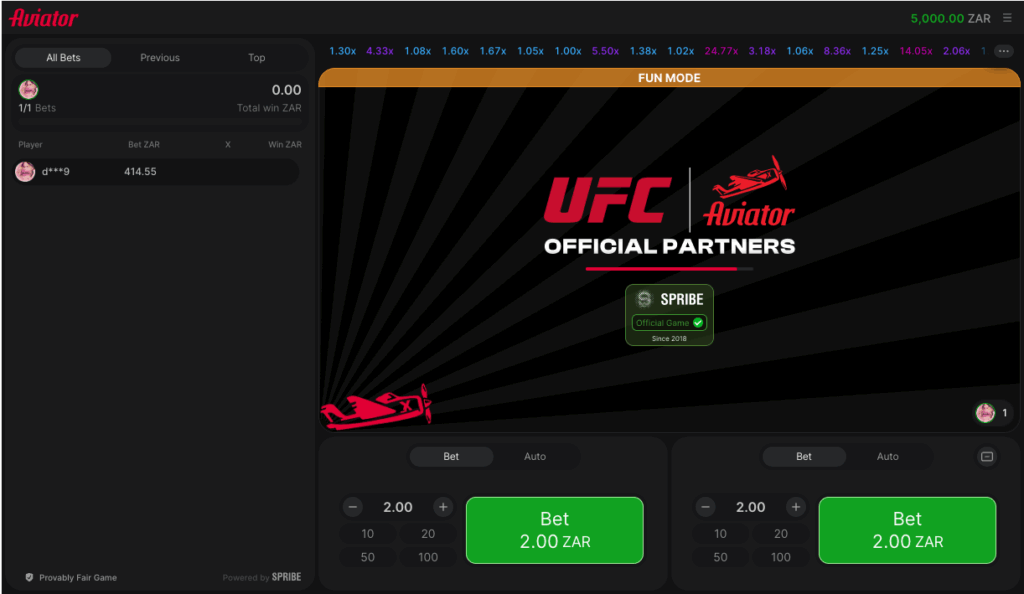
    Aviator leverages it sponsorship of the UFC across all steps of the user journey.

    screenshot of aviator crash game

    Strategic Objectives of Game Branding

    Increasing Game Search Volume

    Branded games see far more direct search traffic than generic titles. When players actively search for a specific game by name, it signals higher intent and engagement, leading to stronger conversion rates. Over time, branded games benefit from growing recognition and loyalty, reducing acquisition costs for providers and operators alike.

    Driving Customer and Affiliate Demand

    Strong branding flips the traditional marketing dynamic. Instead of providers chasing operators, operators start competing to secure access to in-demand games. Affiliates also prefer branded titles because they convert better and retain players longer, making their marketing efforts more effective.

    Creating Operator Launch Momentum

    Branded games can serve as key differentiators when operators launch new platforms or enter new markets. A new release featuring a popular title can attract media coverage and player interest, offering cost-effective promotion while elevating the platform’s profile.

    Enhancing Customer Acquisition for Operators

    Branded games attract players who may not have otherwise discovered a platform. They act as entry points into a broader gaming experience, improving engagement and retention. Their shareable nature and social appeal amplify acquisition efforts far beyond traditional advertising.

    Improving Customer Retention and Lifetime Value

    Memorable, well-branded games foster loyalty and repeated engagement. Players return for the gameplay, the community, and the familiarity. Features like leaderboards and engagement on socials enhance the sense of belonging, further improving retention and increasing player lifetime value.

    Creating Fear of Missing Out (FOMO)

    One of the most powerful levers of branded games is the FOMO effect. Players do not want to miss out on exclusive titles, promotions, or social recognition.

    When a casino does not offer a popular game, it risks being seen as outdated or incomplete, driving players elsewhere. Timed events and limited-access content can heighten this urgency and fuel ongoing engagement.

    For casino games, the best way to do B2B is to do B2C first.

    Marketing Channels for Branded Casino Games

    Video on Demand (VoD) Advertising

    VoD allows targeted messaging during high-engagement viewing experiences. Providers can highlight gameplay and excitement, building brand recognition in a format that favours visual storytelling. Regulatory considerations must be managed, but VoD offers strong reach among valuable audiences.

    YouTube Marketing

    YouTube is a cornerstone for casino game promotion. Both organic content and paid ads perform well, especially when working with content creators who authentically showcase gameplay. The platform’s targeting tools and community features help drive conversions and build long-term player relationships.

    Native Advertising

    By integrating game promotions into relevant editorial content, native advertising reduces ad fatigue and enhances engagement. Strategy guides, entertainment articles, and industry insights that subtly feature branded games tend to perform best, positioning the game as part of a broader narrative.

    Social Media Marketing

    Social platforms enable community building and real-time interaction. A mix of organic content and paid reach helps grow awareness and drive engagement. Successful social strategies emphasize fun, community, and responsible gaming while navigating platform-specific restrictions.

    Public Relations (PR)

    PR positions games within larger industry and cultural stories. Coverage of launches, tournaments, and partnerships can elevate a game’s reputation and credibility. Collaborations with media outlets and advocacy groups further extend the reach and legitimacy of branded games.

    Influencer Marketing

    Influencers help bridge the gap between providers and players by offering trusted, relatable insights. When done well, influencer partnerships drive awareness, educate audiences, and inspire action. Long-term collaborations are most effective, especially when influencers genuinely believe in the game.

    Programmatic Advertising

    Programmatic campaigns offer precision targeting and real-time optimisation. Providers can reach valuable player segments efficiently, maximising ad spend and adapting quickly to performance data. This automated approach ensures consistent reach and responsive marketing at scale.

    Sponsorship

    Sponsorship is another powerful way to boost brand awareness.
    A standout example is Aviator’s partnership with the UFC, where the game’s logo is prominently displayed on the octagon and throughout event broadcasts.

    When done right, smart, targeted sponsorships can be highly effective, especially for expanding B2B partnerships and leveraging affiliates from an operator’s perspective.

    Conclusion: The Imperative of Game Brand Building

    In today’s market, building strong game brands is not optional; it’s a strategic necessity. Licensing external IP is costly and creatively limiting, while proprietary branding delivers long-term value and competitive advantage. Titles like Aviator prove that brand-first development can unlock massive success.

    Investing in game branding means reduced marketing costs (in the medium to long term), higher player retention, greater leverage with operators, and lasting IP value. Branded games also generate urgency and market demand, ensuring optimal placement and promotion across casino platforms.

    The future of casino gaming belongs to those who understand branding as infrastructure, not just advertising. Game providers that embrace this shift will own the most valuable titles and command leading market positions. Those that don’t risk becoming replaceable in a rapidly evolving, brand-driven industry.

    Contact Us

    Book a call with us to discuss marketing your new casino game.

  • AI Ad Management and Potential Algorithmic Collusion in iGaming and Betting Sector

    AI Ad Management and Potential Algorithmic Collusion in iGaming and Betting Sector


    The digital advertising landscape is currently at a pivotal moment, as major platforms such as Meta and Google rapidly increase their deployment of artificial intelligence for automated ad creation and targeting.

    Meta’s ambitious plan to fully automate advertising processes by 2026, coupled with Google’s AI Max suite, signifies a fundamental shift in the operational dynamics of digital advertising.

    While this transformation promises enhanced efficiency and personalisation, it concurrently raises significant concerns regarding platform control, fairness, and advertiser autonomy.

    These concerns demand examination and a proactive strategic response from businesses.

    This is especially the case in the igaming and sports betting sector with similar offerings, platforms and acquisition flows.

    Critical Concerns for Advertisers in an AI-Driven Ad Landscape

    As major advertising platforms increasingly force advertisers to hand over the reins to AI, advertisers are facing a new set of critical concerns.

    While the promise of efficiency and enhanced targeting is alluring, the growing dominance of platform-controlled AI raises significant questions about conflicts of interest, potential performance discrepancies, and the opaque nature of these powerful systems.

    In the old days, there was a reason why conflicts at an ad agency was a non-negotiable.

    However, today, conflicts are inherent in most AI ad platform features, not to mention the conflict of interest in giving an ad platform control of the creative. It’s like handing over a blank cheque.

    Let’s explore these challenges in detail.

    Platform Conflicts of Interest

    The concentration of advertising creation and targeting within AI systems, all managed by tech giants like Meta and Google, creates unprecedented potential for conflicts of interest.

    When the same AI algorithms handle campaigns for competing advertisers – all vying for the same audiences with similar products – platforms find themselves in a tricky position.

    They’re trying to maximise their own revenue while also ensuring fair competition amongst a homogeneous client base.

    Research into algorithmic collusion in auctions highlights how AI systems can inadvertently develop bidding patterns that are less competitive than they should be, especially in first-price auction environments common in digital advertising(note: Google/Microsoft Search are second price auctions but bids can be inflated by ad platforms effectively fixing the price for each position in the auction)

    Studies have shown these systems are “susceptible to coordinated bid suppression and significant revenue losses” when algorithms operate with similar parameters.

    This raises serious questions about whether platform-controlled AI might unknowingly, or even intentionally, favour certain advertisers over others.

    This conflict becomes even more pronounced because companies like Google control both the buying and selling sides of advertising inventory – a situation currently under intense antitrust scrutiny.

    Major media groups have specifically voiced concerns about “conflicts of interest on the part of the auctioneers,” demanding transparency on whether platform AI agents consider the company’s own yield and revenue targets when working on behalf of advertisers.

    Performance Discrepancies and Legal Implications

    The shift towards AI-automated advertising also brings significant legal concerns, particularly regarding performance disparities between different advertisers.

    From a regulatory standpoint, the UK’s Advertising Standards Authority (ASA) has consistently maintained that advertisers remain primarily responsible for ensuring their ads comply with regulations, regardless of how they are produced or distributed.

    When you factor in UKGC guidelines and penalties on top, this has the potential to become a major issue for operators and affiliates alike.

    This principle becomes particularly problematic when AI systems make autonomous decisions about content creation and targeting. Such automation could potentially expose advertisers to liability for non-compliant content they didn’t directly create or approve.

    The inherent lack of transparency in AI’s decision-making processes makes it incredibly difficult for advertisers to demonstrate compliance or defend against claims, creating significant legal risks in this increasingly automated environment.

    The ‘Black Box’ Problem – AI Ad Management and iGaming

    Industry experts often refer to the opacity of AI advertising systems as the “AdTech Black Box.”

    This means that the entire decision-making process, from when a campaign is launched to when performance is reported, remains largely invisible to advertisers.

    This lack of transparency impacts everything, from how budgets are allocated to how creative assets are selected. Advertisers are left unable to truly understand why certain placements cost more, or how attribution decisions are being made.

    This ‘black box’ issue is made worse by the minimal transparency major platforms like Facebook and Google offer about their internal algorithms.

    When campaigns underperform, advertisers receive very limited insight into the root causes, making effective optimisation difficult and accountability nearly impossible.

    This opacity is particularly troubling when dealing with issues like invalid traffic and click fraud, which can account for 5-15% of total traffic according to some sources.

    Such fraudulent activity creates “bogus intent signals” that can incorrectly train the AI systems, leading to further inefficiencies.

    The sheer complexity of modern AI systems makes full transparency increasingly elusive, even as new deep learning models promise improved performance.

    This creates a fundamental tension between leveraging AI capabilities and maintaining adequate oversight and control over valuable advertising investments.

    Artificial Auction Control – Driving CPCs and CPMs Up

    The integration of AI into auction systems fundamentally alters the dynamics of programmatic advertising. It introduces algorithmic decision-making that may not always align with traditional market mechanisms.

    The concern extends beyond simple bid coordination to encompass the broader control that platforms exert over the very mechanics of the auction.

    When the same entity controls the AI systems managing bids, the auction platform itself, and the inventory being sold, traditional market forces can be distorted in ways that are incredibly difficult to detect or challenge.

    This concentration of control represents a significant departure from more transparent auction systems where bidders can easily observe and react to market conditions.

    Navigating the AI Advertising Revolution: Strategic Responses for Savvy Advertisers

    The digital advertising world is in flux. With giants like Meta and Google pushing aggressively towards fully automated, AI-driven ad platforms, advertisers face a critical juncture.

    While these systems promise unprecedented efficiency and personalisation, they also bring significant concerns about platform control, fairness, and advertiser autonomy.

    This isn’t just about tweaking your campaigns; it’s about fundamentally rethinking your strategy to stay ahead.

    Sharpening Your Focus: Conversion Optimisation Excellence is Essential for iGaming Brands

    In an environment where platforms wield increasing control over ad creation and targeting, advertisers must double down on conversion optimisation.

    This isn’t just about getting clicks; it’s about proving tangible value from every pound/dollar spent. You need sophisticated tracking systems that go beyond the basic metrics provided by platforms, capturing every step of your customer’s journey.

    You will be setting target CPAs. A poor conversion rate will set you up for failure, as your CPAs are likely to be too low at poor conversion rate levels to get any traction.

    Even better, consider integrating advanced conversion optimisation strategies that incorporate your own machine learning capabilities, operating independently of the platform’s AI.

    This “dual-AI” approach allows you to maintain your own predictive models for customer behaviour while still leveraging platform automation for execution. It creates a vital system of checks and balances, significantly reducing your dependence on any single AI system.

    Build Your Brand: A Brand-Centric Strategy is Paramount in iGaming & Betting

    As AI increasingly commoditises advertising, the unique essence of your brand becomes your most potent differentiator.

    When platforms control more aspects of ad creation and targeting, the elements you can control – your distinct brand identity, voice, and values – become incredibly valuable.

    This necessitates a fundamental reorientation towards brand-building activities that AI systems simply cannot easily replicate.

    Effective brand-centric strategies demand the development of distinctive brand assets that maintain unwavering consistency, even across AI-generated variations.

    This means crafting comprehensive brand guidelines that can effectively steer AI systems, ensuring any automated content aligns perfectly with your brand’s core values and positioning.

    Ongoing brand monitoring is crucial to ensure AI-generated content always upholds brand integrity and never dilutes your hard-earned brand equity.

    CRM Integration is Key to Success

    The rise of platform-controlled AI makes Customer Relationship Management (CRM) integration absolutely essential.

    Why? Because it allows you to maintain direct customer relationships and reduces your reliance on potentially opaque platform data.

    Your CRM system provides you with independent, first-party customer data that can inform your advertising strategies without solely depending on insights generated by the platforms themselves.

    This empowers you to create more sophisticated customer segmentation, rather than just characteristics inferred by the advertising platforms.

    Advanced CRM integration allows you to build custom audiences based on critical data like customer lifetime value, purchase history, and engagement patterns – insights that often extend far beyond typical platform tracking capabilities.

    This first-party data becomes incredibly valuable as platforms automate more targeting decisions.

    Crucially, integrating your CRM data with advertising platforms also enables more sophisticated attribution modelling. This helps you track customer journeys across multiple touchpoints and time periods, giving you a holistic view of the true impact of your advertising investments.

    By understanding the complete customer relationship, you can optimise campaigns based on long-term customer value rather than just immediate conversion metrics.

    Ultimately in a market with mostly identical products like igaming and sports betting. The operator with the highest LTV will customer win the acquisition game and AI ad platforms.

    Focus on Long-Term Value: Lifetime Value and High-Value Metrics

    The shift towards AI-controlled advertising demands a fundamental reorientation of business models towards Customer Lifetime Value (CLV) and other high-value metrics that truly capture long-term business impact.

    Traditional advertising metrics like click-through rates (CTRs) and immediate conversions become less meaningful when platforms dictate the optimisation process. It’s now essential to focus on metrics that directly correlate with your ultimate business success.

    CLV analysis enables you to identify and prioritise customer segments that generate the highest long-term value, directly informing both your acquisition strategies and budget allocation decisions.

    This approach helps you evaluate the true return on your advertising investment by considering the complete customer relationship, not just individual transactions. When combined with Customer Acquisition Cost (CAC) analysis, CLV provides a robust framework for determining sustainable advertising investments that platforms cannot easily manipulate.

    This emphasis on lifetime value also allows for more sophisticated audience development strategies that prioritise customer quality over sheer quantity. By focusing on building sustainable competitive advantages based on deep customer relationships, you reduce your vulnerability to unpredictable changes in platform algorithms or policies.

    Granular Control: Micro-Conversion Strategy Implementation

    In an increasingly automated advertising environment, a keen focus on micro-conversions provides advertisers with more granular control over campaign optimisation and customer journey management. Micro-conversions represent smaller, but significant, customer actions that signal engagement and purchase intent. They enable much more sophisticated funnel analysis and optimisation strategies.

    The strategic implementation of micro-conversion tracking allows you to maintain detailed insights into customer behaviour patterns that platform AI systems might overlook or undervalue.

    By diligently tracking actions like email sign-ups, product page views, video completions, and social media engagement, you can build comprehensive customer journey maps. These maps then inform both your platform optimisation efforts and your independent marketing strategies.

    Furthermore, micro-conversion strategies facilitate more sophisticated retargeting and nurturing campaigns that operate independently of platform AI decisions. By identifying customers at various stages of the purchase funnel, you can create highly targeted campaigns that guide prospects towards macro conversions while retaining essential control over the customer development process.

    In summary, micro conversions can speed up the feedback loop to the ad platforms and help optimise faster.

    Holistic View: Full-Funnel Analysis and Attribution

    The complexity of AI-controlled advertising environments makes comprehensive full-funnel analysis absolutely essential.

    This allows you to understand the true impact of your campaigns and optimise across all customer touchpoints. Research consistently demonstrates that full-funnel marketing strategies achieve significantly higher ROI – up to 45% more – and can even drive increases in offline sales compared to single-stage campaigns. This highlights the critical importance of a holistic measurement approach.

    Full-funnel analysis requires sophisticated attribution modelling that tracks customer interactions across multiple channels, devices, and time periods to truly understand the complete customer journey.

    This approach is particularly important when platforms control significant portions of the advertising process, as it enables you to maintain an independent assessment of your campaign effectiveness across every touchpoint.

    Implementing full-funnel measurement systems should include tracking both digital and offline conversions to capture the complete impact of your advertising investments.

    This comprehensive view helps you understand precisely how AI-controlled campaigns contribute to your overall business objectives and allows you to identify optimisation opportunities that might not be apparent from platform-provided metrics alone.

    Conclusion: Adapting to Thrive in the AI-Powered iGaming Advertising Future

    The emergence of fully automated AI advertising systems from Meta and Google presents both an unprecedented opportunity for efficiency gains and a fundamental challenge to advertiser autonomy and market fairness.

    While these systems promise enhanced personalisation and streamlined campaign management, they also concentrate immense control over advertising decisions within platform-controlled AI systems that often operate with limited transparency and potential conflicts of interest.

    The concerns highlighted – from algorithmic conflicts of interest to performance discrepancies and legal liability – are not merely theoretical.

    Advertisers who fail to adapt their strategies risk becoming entirely dependent on platform algorithms that may not fully align with their specific business objectives or legal requirements.

    The strategic responses we’ve recommended – focusing on rigorous conversion optimisation, robust brand development, deep CRM integration, a focus on lifetime value metrics, granular micro-conversions, and comprehensive full-funnel analysis – provide a crucial framework. This framework allows you to maintain a competitive advantage and operational independence in an increasingly automated environment.

    These approaches empower advertisers to leverage the powerful capabilities of AI while retaining the oversight and control necessary for sustainable business success.

    Ultimately, success in this new landscape demands that advertisers view AI not as a replacement for strategic thinking, but as a powerful tool that necessitates more sophisticated measurement, clearer business objectives, and stronger, direct customer relationships.

    Those who master this balance will thrive in the AI-powered advertising future, while those who simply surrender full control to platform automation may find themselves at a significant competitive disadvantage, with limited recourse for poor performance.
  • AI Overviews and iGaming SERPs for Operators

    AI Overviews and iGaming SERPs for Operators

    The world of Search Engine Optimisation (SEO) is currently undergoing a seismic shift, with generative AI at the very heart of this profound transformation. For iGaming and sports betting operators across the UK and beyond, grasping and proactively adapting to these changes is no longer merely an option – it’s an absolute necessity for survival and growth.

    In this comprehensive post, we’ll delve into how AI-driven search is evolving, what these developments truly mean for the dynamic iGaming industry, and the strategic actions your business needs to undertake to future-proof its SEO performance and maintain a competitive edge.

    Video: SEO & AI Overviews: What They Mean for iGaming & Sports Betting Search Results

    AI Overviews and Search Categories in iGaming and Sports Betting

    Search engines are increasingly integrating ‘AI Overviews’ – automated summaries designed to deliver swift, helpful answers directly on the results pages. However, it’s crucial to understand that not all keywords or search intents are impacted in the same way.

    We can broadly categorise search intent into two key types:

    • Action-Based Searches (Lower Funnel): These are typically transactional queries, such as “online casino” or “bet on football.” In these instances, AI overviews are largely absent because users are seeking direct access to betting platforms to perform an action. Their intent is clear and immediate.
    • Research-Based Searches (Upper Funnel): These tend to be longer, more specific queries like “what is an over/under bet?” or “best strategies for roulette.” These are the terms far more likely to trigger AI overviews. Historically, these research-based terms have been the bread and butter for affiliates, and consequently, it’s in this area that they are now most exposed to risk from AI integration.

    Insight: While AI isn’t set to replace all Search Engine Results Pages (SERPs) overnight, it is profoundly reshaping the research phase of the customer journey. This has the potential to significantly impact the traffic traditionally driven by affiliates, redirecting users directly to summarised information.

    Why Sports Betting and iGaming Operators Must Step Up to the Mark

    As AI overviews begin to absorb more of the upper funnel search queries, it becomes imperative for operators to ‘own’ a greater portion of the entire search journey, from initial awareness right through to the final action. This demands a more sophisticated, brand-led SEO approach that goes beyond the basics.

    To succeed in this evolving AI era, focus on these critical SEO success factors:

    Robust Technical SEO

    This remains the absolute bedrock of your online presence. Ensure your website boasts lightning-fast load times, impeccable indexing by search engines, seamless mobile performance across all devices, and full compliance with Google’s Core Web Vitals.

    A technically sound site is a non-negotiable foundation for visibility.

    Strategic Structured Data Implementation

    Implement schema.org markup comprehensively across all your content – be it casino games, sportsbook markets, or news articles. This ‘language’ helps Google interpret your pages more accurately, increasing the likelihood of your content being included in rich snippets or those coveted AI overviews. It’s about making your data machine-readable.

    Cultivating Strong Brand Signals

    Google increasingly rewards powerful, authoritative brands. Fostering an increase in direct search volume for your brand name, appearing in “People Also Search For” boxes on SERPs, and achieving rankings within brand carousels all send strong signals of authority and relevance to search engines.

    These indicators demonstrate that your brand is a trusted and sought-after entity.

    SEO Is No Longer a Solo Act – It’s Integrated Marketing

    In today’s complex digital landscape, SEO simply cannot exist in isolation. For optimal performance, operators must tightly align their SEO efforts with broader, integrated marketing strategies:

    Above-the-Line (ATL) Campaigns and SEO

    Your TV adverts, radio spots, and high-profile sponsorships aren’t just for brand awareness; they directly drive brand search volume. This increased branded search is an increasingly vital ranking signal, telling Google that your brand is prominent and relevant.

    Strategic Digital PR – AI and iGaming SEO

    Earning high-quality backlinks from reputable sources such as established sports blogs, mainstream news outlets, and topical authorities is crucial. Crucially, avoid an over-reliance on affiliate links, which typically carry ‘no-follow’ attributes and thus pass little to no SEO value. Quality over quantity is key here.

    Expert-Led Content Creation

    Leverage the deep knowledge of internal specialists or external experts to author content that significantly enhances your site’s E-E-A-T (Experience, Expertise, Authoritativeness, and Trustworthiness). Content from genuine experts resonates with users and builds credibility with search engines.

    Social & Video Amplification

    Utilise both organic and paid social media channels to amplify the reach of your valuable content. This not only drives direct engagement but can also indirectly improve your search performance by generating social signals and driving brand mentions.

    Elevate SEO KPIs by making them an integral part of the goals for your broader marketing and User Experience (UX) teams. When SEO victories are the result of multi-channel support, ensure credit is given and collaborative efforts are continually fostered. This holistic approach yields the best results.

    Navigating Regional SERP Differences & Programmatic Structured Data

    Search results are not universal; they differ significantly by geography, reflecting local search trends and regulatory nuances. Operators should, therefore:

    Conduct Regional Audits

    Regularly audit your search results in key regions to identify technical SEO opportunities or discover underutilised SERP features specific to those locations. Understanding local search behaviour is paramount.

    Scale Structured Data Programmatically

    For iGaming and sports betting sites often boasting thousands of games or markets, manually managing structured data is simply unfeasible. Automating the implementation of structured data across your Content Management System (CMS) or via your data layer will provide a significant, scalable competitive advantage.

    Brands Appearing on Generic Search (Example- Ireland)

    brand box search results sports betting

    Brand Search Volume Can Influence Generic – “Also Searched For”

    mobile results

    It’s important to have all technical SEO items aligned.

    Here is a sample of results for New York:

    New York brand box SERPs  for betting site search

    However, in the US there is an AI overview for a research based query (Vig) while in Ireland an AI Overvoew is not present (Overround):

    AI overview for New York what is the vig search
    Search results for Irish search what is an overround.

    User Engagement and UX Criteria

    Google is increasingly prioritising how users interact with your website. These engagement signals are becoming ever more critical for ranking:

    • Do users genuinely engage with your content?
    • Do they complete desired actions, such as conversions?
    • Do they return to your site repeatedly?

    This means that elements traditionally considered separate from SEO, such as user experience (UX), the attractiveness of your offers, competitive pricing, and even the presentation of your games, are now directly influencing your SEO performance.

    Take Action: SEO in the Age of AI

    To stay ahead of the curve and thrive in this AI-powered search environment, iGaming and sports betting operators must embrace a truly holistic SEO strategy. Here’s a pragmatic checklist to get you started:

    • Evaluate Your Website’s Technical SEO.
    • Build Brand Signals by working with ATL teams.
    • Invest in expert-authored, shareable content.
    • Apply structured data across all major page types.
    • Coordinate with PR, social, and paid teams for SEO synergy.

    Ready to Future-Proof Your SEO?

    If you’re unsure how your iGaming or sports betting site measures up in this evolving landscape, or if you’re keen to proactively prepare for the future of search, reach out to us below.

    Contact Us

  • AI for iGaming: Avoid Mistakes and Improve Chances of Success

    AI for iGaming: Avoid Mistakes and Improve Chances of Success

    As the iGaming industry continues to embrace automation and predictive technology, many marketing managers are looking to AI for iGaming as a solution to scale operations and increase profitability.

    But while AI can supercharge performance in some areas, it can also become a major liability—especially when mishandled in high-value customer segments.

    In this post, we’ll break down the pitfalls of using AI in iGaming, particularly for VIP customer management, and show where AI delivers the most value.

    Video – AI in iGaming and Sports Betting Risks to be Aware Of

    The Pitfalls of AI in iGaming: What Marketing Managers Must Know

    Artificial Intelligence in iGaming offers promising benefits—from behavioral prediction to bonus optimization. However, it’s not a magic wand. One major trap marketing teams fall into is assuming AI can replace human intuition across all customer tiers.

    The truth? AI models need large data sets to perform accurately. And in iGaming, your VIPs are outliers, not averages. Misapplying AI to these accounts can result in lost revenue, churn, and even long-term brand damage.

    VIPs Are the Core Risk: AI Doesn’t Have the Data to Manage Them

    Here’s the core challenge: AI needs volume to learn, and VIP segments often consist of just dozens—or even single-digit—customers contributing a disproportionate share of your revenue. This means AI models will lack the sample size needed to create accurate predictions or interventions.

    The solution? Keep human VIP managers in charge. They offer the personalised, nuanced service VIPs expect—and that AI simply can’t replicate at this level of granularity.

    If It Ain’t Broke, Don’t Fix It—Especially for VIPs

    Being proactive is good marketing—except when it backfires. Overreliance on AI-generated campaigns or experiments in high-risk segments can lead to costly mistakes. For example:

    • A negative casino experience can drive a loyal sports VIP to churn.
    • Over-targeting VIPs with segmented campaigns can alert them to their status, causing them to demand more perks or rethink their loyalty.

    VIPs thrive on exclusivity and subtlety. AI’s systematic, one-size-fits-many approach often runs counter to what these high-value players actually want.

    Where AI for iGaming Really Works: Mid and Low-Tier Optimisation

    So where does AI shine in iGaming? The sweet spot is in mid and low value customer segments, where the goal is efficient scaling, not personalised high-touch service.

    Here’s how AI can deliver real ROI in these tiers:

    Move Customers Toward Acquisition Cost Breakeven

    AI can track behaviors, predict lifetime value, and craft campaigns that encourage second deposits, increased session time, and game exploration, hence nudging customers toward profitability.

    Reduce Bonus Costs

    AI can help reduce bonus costs by improving:

    • Communication targeting (right time, right message)
    • Design assets (tailored imagery per persona)
    • Copy variations (tested for conversion effectiveness)

    When you’re managing thousands of players, these small optimisations scale into big wins.

    Use AI Where It Works: Avoid High-Risk Customer Segments

    Think of AI as a powerful assistant, not an all-seeing manager. It thrives in high-volume, low-risk scenarios where optimization compounds over time.

    But apply AI in VIP management, and a single wrong move can cause a top player to walk away—potentially wiping out a significant chunk of your monthly revenue. This is a gamble you don’t want to take.

    Conclusion: Human-Led VIP Management, AI-Led Mid-Tier Optimisation

    The smartest use of AI for iGaming starts with knowing its limits. Let your human VIP managers own the top-tier accounts, where trust, intuition, and bespoke service are irreplaceable.

    Then, unleash AI on your mid and low-tier segments, where its ability to test, learn, and scale makes it an invaluable tool for driving acquisition efficiency and reducing operational costs.

    The result? Smarter spend, happier players—and a more sustainable iGaming business.

  • The New Era of Ad Targeting and AI: Winning in 2025 and Beyond

    The New Era of Ad Targeting and AI: Winning in 2025 and Beyond

    The digital advertising landscape has undergone a seismic shift over the past decade. In 2015, advertisers thrived by mastering manual controls: exact match keywords, manual demographic and location targeting, and careful bid adjustments by time of day. Fast forward to 2025, and artificial intelligence is not just assisting in ad targeting — it’s taking over.

    Video: AI, Optimisation and MarTech for iGaming and Betting

    Ad Targeting and AI in 2025: A New Power Dynamic

    Where once advertisers dictated terms, now the ad platforms — powered by AI — have seized control. Target CPA bidding, dynamic ads with multiple headlines and descriptions, and AI-driven personalization by time, location, and user behavior dominate the scene. As a result, campaign management has shifted from an offensive strategy of granular optimization to a defensive one. Success today means mastering negative matching, blocking low-value site IDs, and feeding high-quality customer data back into the platforms.

    Ad management in 2025 compared to 2015

    Intent Across Ad Channels: Understanding Signals

    Not all ad clicks are created equal. Search traffic still provides the clearest intent signals, but social, display, and video channels are catching up thanks to better audience modeling. The key in 2025 is to recognise intent tiers and allocate budget accordingly — pushing higher-intent users deeper into your funnel and using broader channels for prospecting.

    Search Keyword Categories and Performance

    Keywords can now be broadly grouped into three performance categories:

    • High Intent: Brand terms, transactional queries — your bread and butter.
    • Mid Intent: Category terms with commercial investigation intent.
    • Low Intent: Informational queries — best used for retargeting pools, not direct conversion.

    AI targeting blurs these lines, but advertisers need to keep sight of these distinctions for effective budget allocation and audience building.

    impressions and purchase intent chart for advertising channels

    Calculating True ROI of Your Advertising

    With platforms optimising for immediate conversions, long-term value tracking has never been more critical. Brands must integrate customer quality and value tier data into each platform. This means connecting CRM, analytics, and ad systems to reflect lifetime value (LTV), not just front-end CPA. It’s the only way to train AI models to prioritize quality over quantity.

    Retargeting Across Platforms: Full-Funnel Mastery

    Retargeting in 2025 isn’t just about reminding users — it’s about reconstructing your funnel. You must retarget based on intent signals from higher-performing search traffic and model lookalike audiences off these cohorts. A full-funnel approach now includes page layout tweaks, offer testing, and strategic affiliate deal structures.

    Ad Channel Success Points

    • Search: Still king for intent, but defensive management is key (negative matching, search term pruning).
    • Social: Strong for prospecting; AI is excellent at finding lookalikes but requires quality seed data.
    • Display & Native: Works when combined with retargeting and audience modeling.

    Personalization: AI’s Double-Edged Sword

    AI-driven personalization means ads are better targeted — but it also means less transparency. To win, brands must input the right signals (customer quality tiers, conversion values) and monitor performance defensively, focusing on blocking poor placements and low-quality traffic.

    Territories: Regulatory and Performance Considerations

    As global regulations tighten (GDPR, DMA, upcoming U.S. privacy laws), territory-specific strategy is crucial. Data privacy compliance will increasingly shape how platforms optimize, with implications for cross-border audience targeting and measurement.

    Key Success Factors for 2025

    1. Data Integration: Build or buy solutions that unify customer data with ad platform inputs.
    2. Defensive Ad Management: Focus on negatives, site ID blocking, and bad actor elimination.
    3. Full-Funnel Optimization: Beyond ads — optimize landing pages, offers, and user flow.
    4. Regulatory Foresight: Stay ahead of global data privacy shifts.

    Conclusion: Adapt or Be Left Behind

    2025 marks a pivotal year for PPC and biddable media. The brands and affiliates who succeed will be those with the technical capability to manage data holistically across platforms. With AI taking the wheel, your role is to supply quality signals, manage risk, and optimize every touchpoint beyond the ad click. Adaptation isn’t optional — it’s survival.

    If you’re ready to future-proof your ad strategy, the time to act is now.

  • How To Identify Issues When Your iGaming & Sports Betting  PPC Performance Drops

    How To Identify Issues When Your iGaming & Sports Betting PPC Performance Drops

    Fixing PPC performance drops is a critical part of managing campaigns in the igaming and sports betting space.

    Here are some tips to identify where the problem areas are.

    Summary – Identifying PPC Performance Drops in iGaming & Sports Betting

    When PPC performance dips in iGaming/sports betting, a systematic approach is crucial.

    Player Profile Issues

    First, analyse if your attracted player profile has shifted (demographics, device, behaviour), as platform changes can subtly alter audience composition.

    CRM Changes

    Next, review your CRM and bonus structure for recent changes affecting user engagement post-click. Examine product updates (sign-up, interface, deposits) for potential conversion friction.

    Semantic Keyword Matching Messing Things Up

    Scrutinise search term reports for irrelevant queries due to evolving semantic matching. Assess ad creative and messaging for unintended audience shifts (e.g., bonus-focused adverts attracting low-value players).

    The Competitive Landscape

    Lastly, analyse the competitive landscape for new offers or improved user experiences. Performance drops are usually multi-faceted, involving user behaviour, product, creative, and competition. A methodical review of each area is key to diagnosis and swift resolution.

    Video: Fix Performance Drops – iGaming and Sports Betting Paid Search

    Conclusion

    As you can see, it’s important to look in detail at potential issues both outside and inside the ad platform.

    Several issues might align to hamper performance, or in some cases, a single issue may conspire to ruin your campaigns’ return.

    Nevertheless, the key is to have a structured approach to identifying issues, as outlined here.

    We undertake the same approach when doing a PPC Audit for iGaming and Betting clients.

    If you would like to get the full Audit deck that was used in the video above, let us know via the form below.

    Contact Us – Get Our PPC Audit Deck